by Gustavo Oliver
Share
An unfinished basement is one of the largest untapped spaces in many North Atlanta homes. In Cumming, Alpharetta, Milton and across Forsyth County, sloped lots often create full basements and walkout lower levels. As a result, homeowners have hundreds or even thousands of square feet waiting to become living space.
Before you start, however, you need a realistic budget. Basement finishing cost depends on far more than square footage. This guide explains the main cost drivers, from moisture control and framing to bathrooms, kitchens and permits. In addition, it shows where to invest and where to save, so you can plan a basement that fits both your family and your budget.
Why basement finishing cost varies so much
Two basements of the same size can have very different budgets. For example, one homeowner may want an open family room with a half bath. Another may want a full apartment with a kitchen, two bedrooms and a laundry room. The second project needs far more plumbing, electrical work, inspections and finishes.
In addition, the condition of the space matters. A dry basement with high ceilings and an existing bathroom rough-in is ready for finishing. By contrast, a basement with water issues, low ductwork or no plumbing stub-outs needs preparation first. Therefore, the starting point shapes the budget as much as the finished design.
The three levels of basement projects
At Loyal Construction and Services, we group basement projects into three general levels.
| Project level | What it usually includes | Typical range |
| Basic finish | Framing, insulation, drywall, flooring, lighting and paint in an open layout | [$X – $Y] |
| Mid-range finish | Basic finish plus a bathroom, a bedroom or office, and upgraded flooring and lighting | [$X – $Y] |
| Full lower-level suite | Kitchen or wet bar, one or more bathrooms, bedrooms, laundry and premium finishes | [$X – $Y] |
These ranges are for orientation only. Your final basement finishing cost comes from a detailed, written estimate after we visit and measure your home.
The main cost drivers
Size and layout
Larger basements need more framing, drywall, flooring and lighting. However, layout matters as much as size. An open plan uses fewer walls and doors, so it costs less per square foot. On the other hand, each bedroom, closet and bathroom adds framing, doors, trim and electrical work.
Moisture control
Moisture control is the most important step in any basement. In fact, finishing a damp basement without solving the water problem leads to mold, damaged drywall and ruined flooring. For that reason, the budget should include any needed waterproofing, drainage, sump pumps or dehumidification. Read more in our guide to Basement Waterproofing Before Finishing.
Framing and insulation
Exterior foundation walls need framing and insulation before drywall. In Georgia’s climate, proper insulation keeps the basement comfortable and reduces condensation. In addition, interior walls create rooms and closets.
Plumbing
Plumbing is one of the largest variables in basement finishing cost. If your home already has a rough-in for a bathroom, adding one is simpler. Otherwise, the concrete floor may need to be cut to install drains. Moreover, if the drains sit below the main sewer line, an ejector pump may be required.
Electrical
Basements need outlets, lighting, switches and, often, dedicated circuits for appliances or entertainment systems. In some homes, the electrical panel needs an upgrade to support the new space. Therefore, an electrician should evaluate the panel early.
HVAC
Heating and cooling must extend to the new rooms. Sometimes, existing ductwork can be extended. In other cases, a separate zone or a ductless system is more efficient.
Ceilings
Low ducts, beams and pipes affect the ceiling design. For example, drywall ceilings look finished but require soffits around obstacles. Alternatively, drop ceilings allow access to utilities. Ceiling choices therefore affect both cost and appearance.
Egress and safety
Bedrooms in basements usually require an egress window or door for emergency exit. In walkout basements, the exterior door may already provide that access. However, in fully below-grade basements, cutting the foundation for an egress window adds significant cost.
Finishes
Finally, flooring, trim, doors, cabinets, countertops, tile and fixtures shape the final budget. Mid-range finishes give most families a durable, attractive result. Premium finishes, such as custom cabinetry or stone, raise the cost.
Rooms that add the most to the budget
Some rooms have a larger effect on basement finishing cost than others.
Bathrooms
A bathroom brings plumbing, ventilation, waterproofing, tile and fixtures into the project. As a result, it is often the most expensive room per square foot. A half bath costs less than a full bath with a shower.
Kitchens and wet bars
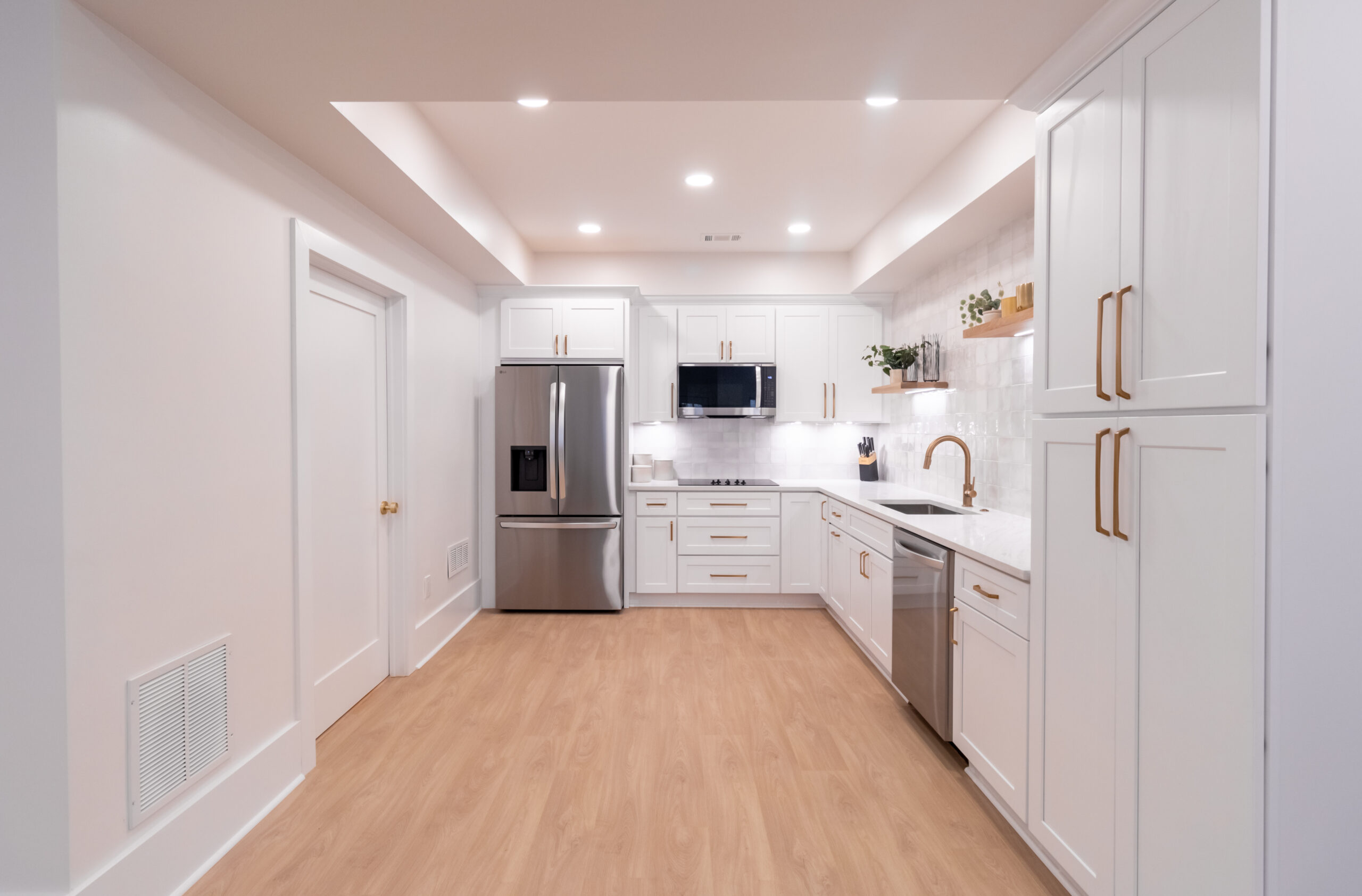
A full kitchen requires plumbing, dedicated electrical circuits, ventilation, cabinets and countertops. By contrast, a wet bar with a small sink and beverage fridge is simpler and less expensive. Our guide to Basement Wet Bar Ideas explains the options.
Bedrooms
Bedrooms need egress, closets and doors. Therefore, each bedroom adds more than an open living area of the same size.
Home theaters
Theaters need sound control, dedicated wiring and lighting. In addition, tiered seating or acoustic treatment adds cost.
Hidden costs to plan for
Even well-planned basements can uncover surprises. Common hidden costs include:
- Moisture problems that only appear after insulation is removed or during heavy rain.
- Radon levels that require a mitigation system.
- Outdated electrical panels that cannot support new circuits.
- Low ductwork or beams that require rerouting.
- Uneven concrete floors that need leveling before flooring.
For this reason, we recommend a contingency of [X]% of the project budget.
Basement finishing cost and North Atlanta homes
Walkout basements on sloped lots
Many homes in Cumming, Milton and Forsyth County sit on sloped lots with walkout basements. These basements have natural light, an exterior door and, often, full-height ceilings. As a result, they are excellent candidates for living space, guest suites and bedrooms. Learn more in our Walkout Basement Ideas guide.
Partially finished basements
In some homes, a previous owner finished part of the basement years ago. In that case, the project may involve updating older work, bringing it to code and expanding into the unfinished area.
Fully below-grade basements
Homes on flat lots may have basements that are fully below ground. These spaces need careful planning for light, moisture and egress. Still, with the right design, they become comfortable family rooms, gyms and theaters.
Where to invest and where to save
Worth investing in:
- Moisture control and drainage.
- Insulation and a proper vapor strategy.
- Good lighting, because basements lack natural light.
- Durable, water-resistant flooring.
- Adequate HVAC for comfort.
Easy places to save:
- An open layout instead of many small rooms.
- A wet bar instead of a full kitchen.
- Mid-range trim and door styles.
- Decorative extras that can be added later.
How a detailed estimate protects your budget
A vague estimate is the main reason basement projects go over budget. Therefore, every estimate should include a written scope, material selections or allowances, permit responsibilities and a projected schedule.
At Loyal, we visit your home, measure the space and evaluate moisture, plumbing, electrical and HVAC before preparing the estimate. In addition, homeowners can compare flooring, cabinets, tile and fixtures at our showroom at 210 Dahlonega St, Suite 107, in Cumming. You can also see finished projects in our basement gallery.
Timeline and its effect on cost
Time affects cost as well. A basic finish moves faster than a full suite with a kitchen and two bathrooms. In general, the project includes design, permits, framing, rough-in work, inspections, insulation, drywall and finishes. To understand each phase, read How Long Does It Take to Finish a Basement?.
Basement finishing cost by room type
Because every room has different requirements, it helps to understand how each one affects the total. Therefore, here is a closer look at the rooms homeowners request most often.
Family room
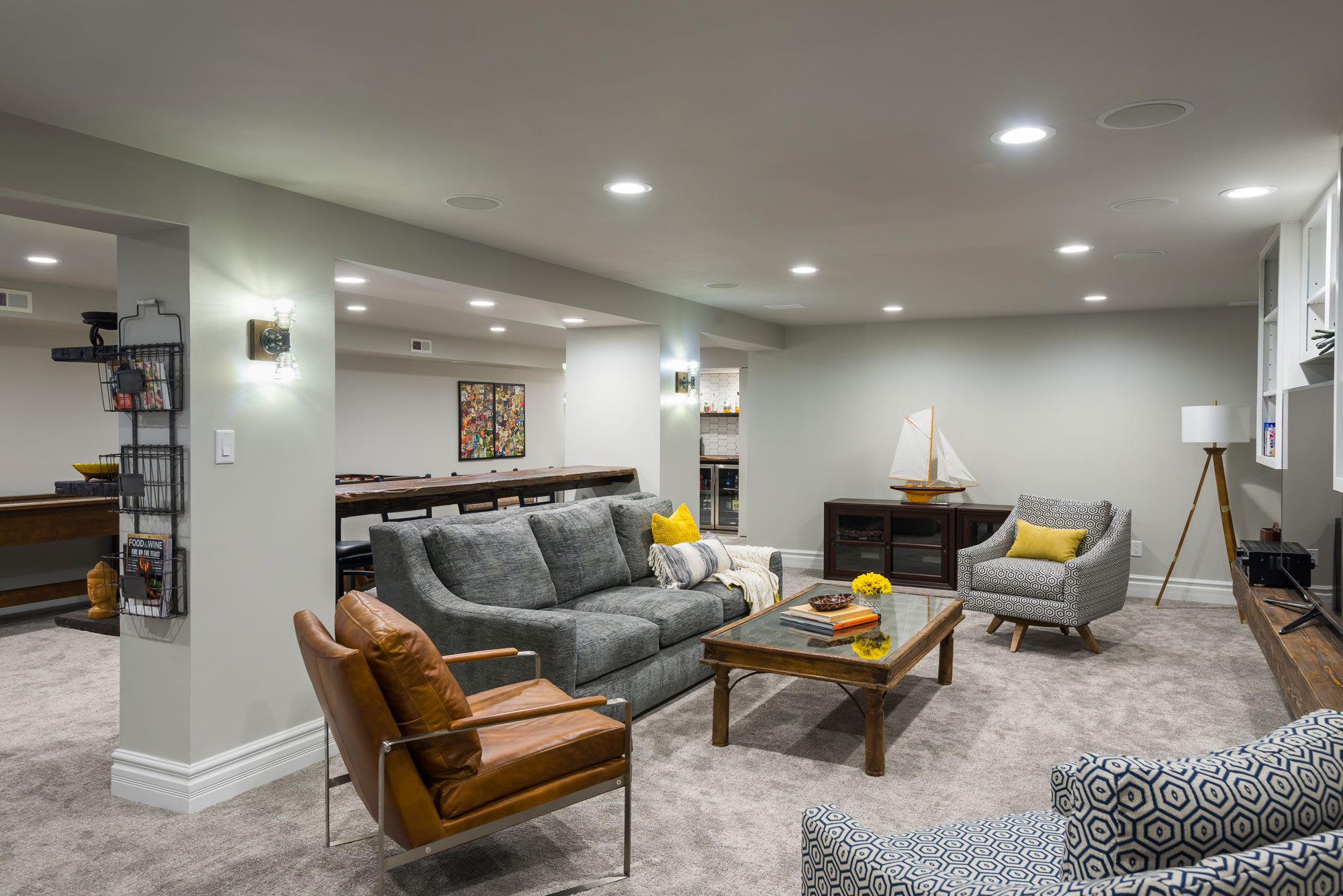
The family room is usually the largest space in the basement. However, it is also one of the most affordable per square foot, because it needs few walls and no plumbing. In addition, most of the cost goes to flooring, lighting, drywall and paint. As a result, an open family room is the best value in most basement projects.
Guest bedroom
A bedroom adds framing, a door, a closet and, in most cases, an egress window. Consequently, it costs more per square foot than an open area. On the other hand, a bedroom placed along the walkout wall may already have a compliant exit, which reduces cost. Read our Basement Egress Window Requirements guide for details.
Home office
An office needs good lighting, outlets, a strong network connection and some sound control. Still, it rarely needs plumbing. Therefore, it usually falls in the middle of the range.
Laundry room
Moving the laundry to a finished basement room requires plumbing, a dryer vent and, often, a dedicated circuit. In addition, tile or LVP flooring protects against leaks. As a result, laundry rooms cost more than their size suggests.
Storage and mechanical rooms
These rooms are the least expensive to finish. For example, many homeowners choose painted walls, sealed concrete and simple LED lighting. However, they still need proper clearances around equipment.
Ways to finish in phases
Not every family wants to finish the entire basement at once. Fortunately, phasing is possible with good planning. For instance, the first phase might include the family room and a half bath. Then, a second phase could add a bedroom and a full bathroom later.
To make phasing work, plan the whole layout from the start. In addition, install plumbing rough-ins, electrical capacity and HVAC trunk lines for future rooms during the first phase. Consequently, the second phase does not require tearing out finished work. Moreover, permits can often be pulled for each phase separately.
Financing and budgeting tips
A finished basement is a significant investment. Therefore, plan the budget carefully before construction begins.
- Set a total range you are comfortable with, including the contingency.
- Prioritize must-have rooms and separate them from wish-list items.
- Ask for allowances in the estimate, so you know how much is planned for each material.
- Choose selections early, because late decisions often increase cost.
- Keep a running record of payments and change orders.
In addition, some homeowners use home equity products or savings to fund the project. Because financial needs vary, discuss options with your bank or financial advisor. Meanwhile, a clear written estimate from your contractor makes those conversations easier.
How basement finishing cost compares to an addition
Finishing a basement is usually much less expensive than building an addition of the same size. In fact, the foundation, roof and exterior walls already exist. As a result, you invest mainly in interior work. On the other hand, an addition adds above-grade square footage, which appraisers may value differently. For most North Atlanta families, however, the basement offers the best combination of space and cost. Read Does Finishing a Basement Add Value? for more on resale.
Frequently asked questions
How much does it cost to finish a basement in North Atlanta?
It depends on size, layout and finishes. A basic finish costs [$X – $Y], a mid-range finish costs [$X – $Y] and a full lower-level suite costs [$X – $Y].
Is it cheaper to finish a walkout basement?
Often, yes. Walkout basements usually have an exterior door for egress and better natural light, which reduces some costs.
Does adding a bathroom increase basement finishing cost a lot?
Yes. A bathroom adds plumbing, ventilation, tile and fixtures. However, an existing rough-in reduces the cost.
Do I need a permit to finish a basement?
In most North Atlanta jurisdictions, yes. Read our Basement Finishing Permit guide for details.
Does finishing a basement add value?
A well-finished basement adds usable living space. The amount of value depends on your neighborhood and the quality of the work.
Plan your basement with confidence
Understanding basement finishing cost is the first step toward a lower level your family will use every day. When moisture, layout and finishes are planned carefully, the budget becomes predictable.
Request your free estimate or call (678) 771-5244 to schedule a consultation with Loyal Construction and Services. See more on our Basement services page.
by Gustavo Oliver
Share
STAY IN THE LOOP